12 July 2015

Long Term Cruising on a Budget: 10 Designs to Consider

Long Term Cruising on a Budget: 10 Designs to Consider 


For other ideas see:First the disclaimer. I am a boat owner, but my cruising has been mostly limited to two-three week spells, whilst on vacation from a full time job, with one longer trip across the Bay of Biscay to help a friend with the first leg of a transatlantic crossing from the UK to the Caribbean.

So, I am really writing this as a compilation of the ideas that I have gather from researching this over the last few years.

Most cruisers seem to suggest that the big questions must be considered first:

What is your budget? Where to you want to sail? And will this involve long passages and the risk of big weather? And who and how large will comprise the crew?

After that the answer seems invariably to be go small, go now.

Some of the most seaworthy boats are pretty tiny and can cruise the world if partnered with good weather information, a competent skipper and patience.

Here is a list of
designs available in Western Europe (and the UK), suitable for blue water (ocean) exploits that I would consider on a 'starter' budget:

1. Vancouver 27 -- Read the excellent e-books of Martin Edge for a flavour of what you can do in this design of long/full keeled yacht. There are three for sale at the time of writing for between 20 000 and 28 000 pounds sterling (and that is sticker price).  If you budget can stretch take a look at the 28 and 32 foot designs or a Victoria 34 for comparison.

2. Elizabethan 29  -- Another full keel pocket blue water cruiser dating from the late 1960 (made of solid fibre glass).  There are some good examples out there for a song. (I have just spotted one for 4500 GBP.)

3. Achilles 24  or Corribee 21. Check out Roger Taylor's approach to making a small hull like these sea worthy for high latitude sailing: http://www.thesimplesailor.com/index.html and his Vlog.

Don't under estimate the effort it take for this kind of conversion.  See http://www.achillesyachts.co.uk/page63.html for ideas of the going rates, from about 2500 GBP, but remember the hour of work (and expertise) that Roger puts in to make them watertight and safer than the original design.

4. Contessa 32. In my early 20s this was the design of blue water cruising dreams. You can pick one up from as little as 12000 GBP or 20 000 for a half decent example.

5. Van Der Stadt 34 -- a well known Dutch steel design, from about 25 000 GBP.

6. Albin Vega (27 ft) yachts have a good reputation.  Some of the larger designs such as the Ballad may be worth considering too. See http://www.albinvega.co.uk/brokerage.php for the UK vega brokerage.

7. Rustler 36. This is a real gem of a design (I nearly bought one).  From around 40 000 GBP.

8. Hallberg-Rassy 35 RASMUS (or other smaller designs such as the 31) are great little yachts.  For me they don't always age well: teak decks need replacing after 20-30 years for example, but worth consiuderation.  The older designs are more traditional -- safety, comfort and design margin.


9. Bavaria 32 Form around 20 000 GBP this is a grate value boat under 15 year old. Of the stable of modern mass market boats these age more gracefully than their Jeaneau and Beneteau counterparts. The build quality and craftsmanship is unusually high for a budget family cruiser design. See what one of these can do when set up well: https://www.youtube.com/channel/UCDJIgr5AVMYuQnS_eugSvlA


10. Moody 31. From about 20 000 GBP these sturdy cruiser could be a good option.  Skeg hung rudder, good spec and build quality bode well for this popular cruiser of yesteryear.

http://www.sailfarlivefree.com/2012/03/top-10-favorite-affordable-bluewater.html
http://sailboatdata.com/
http://www.yachtsnet.co.uk/archives.htm
http://www.cruisingworld.com/sailboats/peoples-choice-best-cruising-sailboats
http://bluewaterboats.org/


Party, fun & games, and a bent stopcock

Party, fun & games, and a bent stopcock 

Froo Gal, Copyright (c) 2015, All Rights Reserved
After a couple of weekends of chores, we took Froo Gal to the beach, anchored off and had a beach party. BBQ grill, coolers, more wine than we could drink, more food than we could eat, good friends, sunshine and a gentle breeze made having fun easy. Even the dodgy outboard motor worked... just.

Crawling into our bunks later than normal in the early hours of Sunday morning, we were out like lights and did not worry about being on the hook. (It normally takes a few nights at anchor to get comfortable.) Two of our friends had arrived several hours earlier in their small keel boat and moored close to us. We offered them a spare cabin for the night and they gratefully accepted after the party -- much better than camping in an open cockpit in a choppy anchorage. Their seamanship was excellent -- over-sized anchor with plenty of warp down; closely observed to check she was not dragging and by 0500 she had not moved an inch. However, when I got up at 0730 she had dragged 200m down to a very large metal buoy -- a channel marker.  Was she damaged? I could not quite see... it did not look good.

Rousing the guest crew and quickly donning life jackets and grabbing a couple of spare mooring warps my friend and I jumped into the tender, fired up the dodgy outboard and went to rescue the keel boat. As it turned out, she was just past the channel buoy and had not hit it, but she had the anchor warp around her keel, so had been lying beam to the wind and tide, making he look as if she was lying on or wrapped around the large buoy. Luckily she had completely missed it and taking the tension of the anchor line by towing her with the tender, we managed to unravel the mess without hitch and got back to Froo Gal for a light breakfast, without running out of fuel for the outboard -- something that had been nagging at the back of my mind during the 'rescue.' On arrival back at Froo Gal I refilled the outboard's tank and realized that its extended use and new fuel had flushed it through and it was running much better -- a silver lining to the fun & games we'd had before breakfast.

Bent seacock, Copyright (c), 2015, All Rights Reserved
Somewhere along the trip I managed to 'close' a seacock, except that it had seized and all I had done was fold over the aluminum handle. We had known was getting a bit sticky and would probably need replacing.  It's now the job at the top of our to do list! 

It rained much of Sunday, so we went back to the marina, hid in Froo Gal and tidied up the boat -- it was fun of sand.  The left over salad was full of sand, so was the bread, most of our clothes, and our hair. Those huge marina mooring fees sometimes seem value for money when you grab a hot shower in a shower room with a heated floor!


6 July 2015

Space saving on board

Space saving on board 

As any boat owner knows, the ideal size of yacht is five feet larger than the one you own. Or so goes the adage. The reality is that no matter the volume of your boat there never seems quite enough space and the boat's use, inventory, equipment, crew and provisions have to be considered when optimizing the space available.

On Froo Gal we have the luxury of using her for weekend cruises for the most part, but that brings its own problems.  Every time we arrive at the boat
each crew member brings a kit-bag full of clothes and other goodies, some of which get left on her each time we leave. The chart table gets filled with knickknacks; lockers overflow; and bunks are covered with things that 'might come in handy.'

As a result we have the occasional clear out and a run through the inventory. We have also been thinking about space saving items and ideas. Here are a few that we have tried or identified:


Squashed Juice, Copyright (c) SV Froo Gal 2014
All Rights Reserved
 
1. Folding bucket.

2. Travel towel.

3. Small craft almanac and leisure folios chart folios.

4. Concentrated drinks.

5. Instant foods (as backup meals) and dried pasta.

6. MP3 player / iPhone for music.

7. Kindle / iPad for books (novels not essential sailing books).

8. Vacuum pack bags.


9. Boxes of wine (they stack well).


10. Activated carbon water filter(avoiding the need for extra bottles and water containers).


11. Nets to hang fruit and vegetables (extra storage space).

12. Use the bilges.

13. Think about rubbish, trash, garbage, waste.

14. Inflatable kayak.

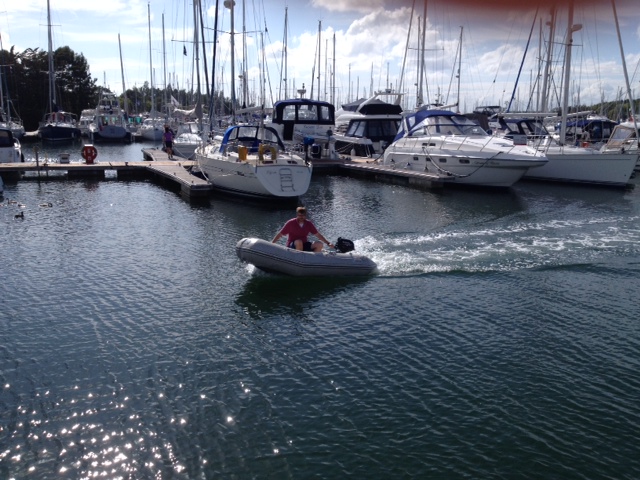
15. Inflatable dinghy.


16. Short sea boots.


17. Space saving kedge anchor (I bet we never assemble ours).


18. Nesting cooking pots and pan.


19. Remove unnecessary duplicate items.

20. Folding bicycle (too good to rust away on a boat).

21. Cockpit tent (creates more usable space).

22. Hammock (more leisure space to get away from the rest of the crew).

23. KISS Keep it simple stupid! Don't horde; remove items that you don't use; remove excess packaging; choose food packages and storage containers that fit well in the spaces you have available.

24. Telescopic fishing rod.

25. Blue tooth speaker (&iPhone/iPads) for music/multimedia.

Searching the Web and forums identifies some interesting ideas:

theboatgalley.com has lots of useful food and cooking related ideas. Some might save space.

boatus.com/magazine/archives/savebigtime.asp identifies a number of 'interesting' ideas to save time and money (some of which may also save space).


More to dos 'done'

More to dos 'done' 


Running the outboard, Copyright (c) Froo Gal, 2015,
All Rights Reserved
We are well and truly into summer, having enjoyed the hottest day in July since records began, but the list of 'to dos' keeps growing.

This last month has included:
1. Fitting an AIS transceiver (see separate product review);
2. Fitting a (removable) cheap SSD PC microcomputer;
3. Servicing the outboard; and
4. Measuring for a cruising chute.

The AIS was simple to fit and to us represents a cost effective safety improvement.

The solid state drive PC was an impulse purchase. It came with built in wifi and Bluetooth and was simple to configure. Unfortunately the marina's wifi is not stable or strong enough for the little blighter, so we may ditch it.
Our outboard wintered badly. It did start first time using old fuel, but under load at max throttle it cut out. Armed with some carb cleaner, latex gloves and a small plastic contained to catch drips of petrol and cleaner and *no maintenance instructions* I 'serviced' the carburettor. And  I topped up the fuel with new petrol. Afterwards it ran okay and did not cut out, but it was still ropey at the top end.

A few YouTube 'how to' videos later I had another go at dismantling the carb. I felt that I had done a more thorough job (but not perfect).  It had made no difference. Perhaps the 50% old fuel was still the problem.

Measuring for a new sail was more fun and trouble free. I tied a thin polyester cord to the spinnaker halyard raised it to the top and marked off the I and max hoist (to the pulpit) measurements. I then marked off J from the foot of the mast to the bow forestay.

I measured (twice) the three dimensions using a metre length of tape measure -- job done. Now, we need to start saving for the sail, snuffed, sheets and turning blocks.


Swan Famility, Copyright (c) Froo Gal, 2015,
All Rights Reserved
And all the while a certain member of the Froo Gal crew drank wine and soaked up the sun while reading a book and watching the swans.

Next time I will try to take the time to take some shots of the carburettor or even make a 'how to' video.  Any advice on the Suzuki DF2.5 from readers would be most welcome. 

26 May 2015

Saving money on wine

Saving money on wine

By sailing to France

Froo Gal Decal, Copyright (c), 2015,
All Rights Reserved
We enjoyed light winds, smooth sea, and fair weather; ended up motoring 80% of the crossing (both ways) to Cherbourg this weekend.

Cherbourg was very quiet -- off the beaten track on a Sunday -- but we enjoyed some top cuisine Francaise and made back some of the diesel cost on the savings we made of a few bottles of Claret each. A top tip from the frugal crew of Froo Gal!
 

Preparation and Passage Planning

We enjoyed the preparation and planning for the cruise nearly as much as the trip itself. Our preparations were not much greater that a typical weekend cruise around the Solent. Here are a selection of the tasks that we set ourselves beforehand:


Write passage plan -- done; it was easy and worked very well. We used a combination of a digital Reeds Almanac for the tide times, Admiralty Channel Tide Tables, Solent and Channel Islands/Cherbourg Admiralty Small Chart Folio charts and Navionics electronics charts for the planning and navigation.


Pack Hammock -- strung and functionally checked by at least one member of the crew on a sunny Sunday afternoon.


Buy French courtesy flag -- success second time around. The first attempt yielded a red ensign even though the packaging was clearly marked French courtesy flag.


Tighten alternator belt -- it had been slipping. It turned out that the professional that had serviced the engine at the end of last summer had not fitted it correctly. So we replaced it (wrongly by copying the last placement) and then did our homework and correctly fitted it.

Fit new horseshoe buoy and Dan Buoy -- done. Fortunately not used in anger.

The crossing

Early starts at 0430 (first light) on both the outbound crossing and the return passage were a bit of a shock to the system. Endless cups of tea and snacks saw us through.

We nominally cruised in company with three-hour radio checks and position logs for the fleet, but owing to different sail plans (we had no downwind sail) and water-line lengths we soon lost sight of the others. It was good peace of mind to know that our radio was working and someone knew our last position.

Including pilotage, both passages took us 13 hours, avoiding the need for any serious night sailing.

Radar gave us some additional confidence when dodging large ships, but visibility was good and we had no need to worry. The skipper was a dinghy racer and could have missed those tankers by inches if necessary!

We enjoyed all points of sailing as the wind veered and and backed (and mostly dropped to nearly nothing.

Arrival and short stay


The approach to Cherbourg was straight forward -- we had advice from a Channel Pilot book, two almanacs and three skippers in the crew who had visited before.

Docking was drama free as it has to be one of the most sheltered mooring on the English channel.  The man-made outer harbour is huge. Its moles provide a frugal looking anchorage in the harbour, but we took advantage of the 20% discount that the cruise leader had negotiated. The inner harbour/marina, although large by marina standards added additional shelter for the walk-ashore floating pontoon moorings. With mooring fees at about 50% of the cost of the Solent, we2 were racking up the savings.

The paperwork in the Marina office was minimal and the friendly staff spoke English putting our rusty, basic French to shame. The only sign of officialdom was a large Pilot boat making frequent trips to the outer harbour.

Increased 'to do' list


The main thing that this venture taught us, is that we need a downwind sailing rig. We have been mulling over the options of symmetric spinnaker  vs. cruising chute for some time. We now must put in the extra effort, make a decision, spend hard-earned money and cut holes in the deck (well perhaps not the latter, depending on the option chosen).

Was it worth it?


A resounding, yes. It boost confidence in your vessel and your crew to sail out of sight of land.  A first step to serious long distance, blue water cruising!


9 May 2015

Being Frugal: DIY on Froo Gal

Being Frugal: 

DIY on Froo Gal 

We are sorry that we have not posted in many weeks. The weather has been too good -- a rare treat in the UK at this time of year. England this year had the sunniest April since the 1920s. But we have used the time to good effect. 

'Before,' copyright(c) Froo Gal,
2015, All Rights Reserved
The list of jobs completed includes: new prop fitted; sticky winches serviced; lights and whistles fitted to horseshoe buoys; slipping alternator belt replaced; mail sail battens and tell-tails fitted; reefing lines threaded; anchor snubber fitted; and a shake-down cruise completed, which included practice with the radar (it was a bit foggy).
We have also bought numerous small 'essential' items: pilots books; charts; tidal atlas; emergency navigation lights; kedge anchor; chain and warp; Lewmar winch service kit.

So what have we learned?

1. Most job are straight forward if you have instructions, you prepare well, you have the right materials and tools, you are moored on a pontoon or on the hard, and the weather is good. Use the instructions that came with the boat or item in question, look on-line (especially on YouTube) or the manufacturer's site and maintain a good record of your inventory on the boat and at home (this will save you buying the same item multiples times -- we must have six of more cans of WD40!).

'Gunk,' copyright(c) Froo Gal,
2015, All Rights Reserved
2. The time to complete most simple jobs would be expenses at boat yard rates -- do it your self (DIY) almost always saves money.

'After,' copyright(c) Froo Gal,
2015, All Rights Reserved
3. Two heads are better than one (but not of the toilet variety -- that would just be more mainteance). DIY with a buddy or a small team is more productive, less prone to simple errors and seems to achieve more than solo ventures.

4. Shop around. On-line prices will save 5-20% (or more) on marine chandlery prices, but watch out for the delivery fees and consider the service quality and timeliness of order fulfillment. Also in the long run it pays to put some business the way of suppliers local to your mooring as there will always be small items where paying a premium for the convenience is useful. We leaned that it was almost impossible to find any decreasing agent in Cowes (on the Isle of Wight) late on a Bank Holiday Saturday afternoon. Finding premium brand sailing fashion clothing was no problem; there were numerous shop open well into the evening (but that did not help our sticky winches).

5. Marine service items can be ridiculously over price and better value for money items can be found (but you have to do you homework). The Lewmar winch service kit is a good example. The kit we bought included oil, grease, a brush (for the grease), an instruction booklet and some springs. Sourcing these items separately (perhaps paired with a different Lewmar service kit) would save an estimated 50% of the cost.


'Spare Prop' copyright(c) Froo Gal,
2015, All Rights Reserved
6. There are some really great, but small, expert suppliers and service providers in the sailing community. Batt sails is a good example. Dick Batt the owner is friendly, knowledgeable and offers a great service on sail repairs and valeting a very keen price. He was recommended to us by others in the sailing industry -- word of mouth recommendations are invaluable.

7. Taking advantage of free offers (such as free reciprocal moorings at marinas and clubs), promotions and sales can save 10s of pounds on a weekend cruise, maintenance day, or significant purchase. For example at Jimmy Green (a great family run chandlers -- a favourite of our for the reliability and service) Dan Buoys are ~20% off at the time of writing.

8. When buying charts and pilot books, check that you are buying the latest edition (or make sure you are comfortable with an older edition), otherwise that 'bargain' might prove to be anything but.

9. Small repairs and preventative maintenance are much more cost effective than replacing items. Our best purchases has been a sewing kit (sailing palm, waxed cotton thread, needles, and whipping twine). It's amazing what some spinnaker repair tape and a few stitches will repair.
'Crumpets' copyright(c) Froo Gal,
2015, All Rights Reserved

10. Eating on boat rather than drifting to pub, bar or (yacht) club saves a fortune. Our latest 'find' that helps with this unwritten objective for the Froo Gal crew is an old camping toaster that we unearthed from the bowels of our garage. Toast for breakfast can be an important morale booster when sailing! (In bad weather, for kids, or for a grumpy, hung-over crew).